Welcome to my Life as an Endurance Athlete, 2x Cancer Survivor, Wife, Mommy, and Grandma. My philosophy is to "Be STRONGER today then you were yesterday and inspire as many people as possible with your strength, determination and PASSION." Remember ~ To DREAM BIG and "No matter how long your dream takes you don't give up on it!" ☀️
Friday, May 08, 2015
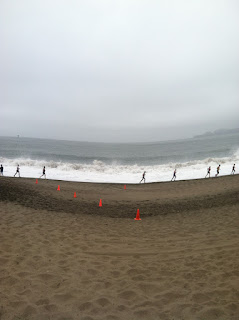
My Escape from Alcatraz TRI!
http://amyshealthybaking.com/blog/2014/07/13/raspberry-oatmeal-cookies/
Yield: 15 cookies
Serving Size: 1 cookie
These are the softest & chewiest oatmeal cookies you’ll ever make, and the fresh raspberries add an irresistible sweetness and subtle tartness. Store any leftovers in an airtight container on the counter for up to a week—if they last that long!
- In a medium bowl, whisk together the oats, flour, baking powder, cinnamon, and salt. In a separate bowl, whisk together the coconut oil, egg, and vanilla. Stir in the honey until thoroughly incorporated. Add in the flour mixture, stirring just until incorporated. Fold in the raspberries. Chill the dough for at least 30 minutes. (If chilling longer, cover with plastic wrap, ensuring it touches the entire surface of the cookie dough.)
- Preheat the oven to 325°F, and line a baking sheet with parchment paper or a Silpat.
- Drop the cookie dough into 15 rounded scoops on the baking sheet. (If chilled longer than 1.5 hours, flatten slightly.) Bake at 325°F for 13-15 minutes. Cool on the baking sheet for at least 15 minutes before turning out onto a wire rack.
Notes: It’s incredibly important to measure both the oats and whole wheat flour correctly, using the spoon-and-level method described in the links above. If scooped from the container using the measuring cup, you’ll end up with 1.5 times as much, which will dry out your cookies and make them crumbly.
To make your own instant oats, pulse 1 cup of old-fashioned oats in a food processor 5-8 times.
Melted unsalted butter or melted margarine may be substituted for the coconut oil. Regardless of which is used, be sure that the egg is at room temperature before whisking it in. A cold egg added straight from the fridge would rapidly cool the fat source, resulting in small blobs of semi-solid coconut oil or butter.
If the cookies are still really flimsy after cooling on the baking sheet for 15 minutes and threaten to break apart, let them cool completely on the baking sheet. That won’t let them crisp up too much, and they’ll still stay soft for an entire week!
{clean eating, low fat, low calorie}
http://amyshealthybaking.com/blog/2014/07/13/raspberry-oatmeal-cookies/
Thursday, May 07, 2015
So much as been going on
~Positives achieved
Escaped Alcatraz 18th in my age group (I'll post story soon), a few marathons, half marathons and more Tri's
Qualified for 70.3 nationals
My family is doing amazing
My business is incredible!! I'm so blessed
The Negatives, well there's none life is to short for Negatives (everything happened's for a reason)!
Now really working on my running, this year I'm going to work on my Speed see if I can get back to where I was..
Sunday, December 01, 2013
Thursday, October 24, 2013
Another amazing photo from Escape from Alcatraz Triathlon. No swimming for me today today is Cycling/TRX Training...
Wednesday, October 23, 2013
Swim 10/23 Air Temp. 42 Water Temp. Freezing!
Thursday, October 10, 2013
Tuesday, October 08, 2013
Yesterday I did all 3 sports open water swim. bike, run all backwards just to see how I would feel today and I feel amazing!(I haven't done this type of training for so long). Today I was asked by one of my amazing clients "are you back in the Tri world again" I said with a huge smile on my face "yes I am" whoooohooooo!
The fall colors are so unbelievable we're so lucky to live in this amazing world.
Sunday, October 06, 2013
When I started swimming the air temp was 51 and I heard the water temp is low 50's
A little bit of fun!
Yep jumping off the toilet to get my swim suit on.
Yep it worked.
Challenge 2 getting my wet suit on..... and yes I had two swim caps
Now swim 1 1/2 and yes the water was so calm and so inviting until I stepped in "OMGOSH WOWZA!" "COLD, COLD!" Then I thought to myself complain isn't going to get me anywhere get going, and I did! I stopped 1 time to fix my goggles and to get my head back into the game. When you don't swim like this for 4 years and your wet suit is a little tight you can get a little anxiety (I"m only human) :)
Swim went great! I swam a little over 1 1/2 in great time my confident level is up "Whoooohoooo"
Yep, this is my next shirt, the next time I have a little fear about something...... I'm putting it on.
Saturday, October 05, 2013
I took my body fat% (21%) to see where I'm starting at, tomorrow I will see how long it takes me to swim a 1 1/2, run 10 miles and bike 20. Yea I know it's over the distance of the race but I wanted to round up. :)
For my training nutrition will be a big one for me however, I will have peeps, gummy bears and yes licorice (Thank goodness for carbs in them). I will be indoor and outdoor cycling, using my TRX and body weight training (INSANITY Boot Camp Training Style 3days a week) my dreadmill and out side running as much as I can, "OH" and I can't forget about the stairs I will be running them at my Studio and at UWL, I also have a training spot for up hill running but I can't give everything away.... LOL
This year is going to be AMAZING!
This is a Dream race of mine, I told myself I don't want to just finish, I want to kick A**! "In a nice positive way of course!" :)
"DREAM. BELIEVE. ACHIEVE. ANYTHING!"
Friday, October 04, 2013
Finding out I'm in!
It's 3:50 am getting ready to head out the door for my workout before INSANITY BC Training, the first thing I do is look into my e-mail see if there's anything from Alcatraz........"No Way" I see there's an e-mail I open it right away and this is what I read
Hi Danniela
— Jack Canfield
I'm so "Excited"!!
Saturday, April 28, 2012
I was asked how's it going??? I said "I wish I could take my bike out and ride 100 miles and run 26.2" MMMMMM however, I have to remember my goals.
Now this week I'm going to try and follow Jamie E. Nutrition program as much as I can so far so good I made the Protein Carrot Bars last night, I don't know if I could do the Turkey muffins yet "YUCK" in a nice positive way!
Time to make Eggs with my son.
Wednesday, April 25, 2012
Tough! However, that would be normal it's always challenging to change the way you've been doing things for 39 years .......lol...
Today was Back/Triceps "ok" and run 2 miles followed by the stairs....I have to say that's the hardest thing not to do is RUN....
Eating very clean no candy/treats..... I've been looking up and posting so many different recipes with Protein on my Studio Fit Facebook page, they're so good!
Off to make a shake.
Happy Training, Train Smart!
"Perseverance, Persistence, Consistency is the key!
Monday, April 23, 2012
What a great day, at the Studio at 4:15 am I did heavy legs with 1 min. cardio (running stairs) this afternoon was 30 min. of endurance weights back/bicep.
The hardest thing for me to hold back on is my running OUCH....
Eating was really healthy however, I think I ate to many almonds.... oops!
Train Right and Eat Clean!
Sunday, April 22, 2012
Jamie's Plan..
Maybe: Going off of Jamie plan I'm thinking I'll have to do it like this:
Monday -Legs+/
Tuesday- Cardio Cycling/TRX/ Running (3)Jillian abs
Wednesday Back/Shoulders
Thursday- Cardio Cycling/TRX/Running (3) Jillian abs
Friday -Legs/Calves
Saturday- Crazy Cardio Day
Sunday- Yoga/Jillian abs
Day 2
Breakfast: Whey Protein/coffee
Berries, flaxseed
Multi vitamin: 1
Fish oils: 2
Thyroid medication: 1
Snack 20 almonds/kiwi/cukes
Lunch salad/tuna
Snack cukes with hummus
Note:
I did purchase Jamie E. pack of supplements (that she recommended) on Bodybuilding.com
Saturday, April 21, 2012
12 week Transformation Challenge kick off today!
/www.bodybuilding.com/fun/jamie-easons-livefit-phase-1http:/.html
84 days to go
Weighed in at 136 with a tummy ache- and very blotted
Body fat% was 20
Took photos today wowza!!
Inches the same as March 31st
Cardio for today was a ton! 1800 cal worth
Nutrition: I'm going to do a 10 day blast and see how my body changes from that.
Breakfast: Veggie omelette
snack: shake 20 almonds
Lunch: chicken salad with 2 egg whites
Snack: tuna with lots of cukes
Dinner huge salad with chicken 2 tbsp of ff Italian dressing
Water intake:120+ Coffee intake 8oz Tea 1/2 cup
Supplements: 4 Fish oils, 2 Multi Vitamin, 3 Catalyst and 2 Bcaa
Sleep: not that much however, that would be normal... :)
Feeling great now time for bed and read my Oxygen Magazine.
Friday, March 30, 2012
Thursday, March 29, 2012
I've done Ironman's, all kinds of Tri distances, Marathons, Half Marathons, Obstacle Course races time for a BIGGER challenge for me.....
I'm looking at doing a few fitness modeling, fitness competitions "Yep", you read that right.....
The best part about this is I have never wore a two pc. in front of anyone "wait" yes I have in the back yard now my yard is fenced in.....lol...
I'm thinking this will be the biggest Challenge only because of the nutrition, eating more protein and not carbs is going to be extremely different.
I will not post photos however, I will give out my measurements and my body fat % when I get to where I would like to be then I'll post before and after photos....
As of March 3/17
C- 34
W- 30
H- 35
RL- 22.25
B- 11-1/2
BF% 18
Basic Simple today!
Thursday, April 07, 2011
Sun, May 1 La Crosse Fitness Festival,
June 5th Wis Dells???? or June 6 Minneapolis Half Marathon,
July 10 Devils lake half marathon Baraboo.
Madison Mini Aug. 20th
The Full Marathons this year!
May 29th Madtown,
Fox Cities Sept. 18th,
Twin Cities Oct.2nd, Maybe??
IMT Des Moines Marathon Oct. 16
I have to share this again! ~There is a difference between 'interest' and 'commitment'. When you're "interested" in doing something, you do it only when it's convenient. When you're "committed" to something, you accept NO EXCUSES, only results. So, here's the tough question: Are you "interested" in a healthy lifestyle? Or are you "committed" to having a healthy lifestyle?
New Races!
This year has changed a ton here is some of the races I'll be doing!
Saturday, April 16, 2011 Fire House 5K
Sat, Apr. 30 Iowa Drake On the road half Marathon Des Moines, IA
Sun, May 1 La Crosse Fitness Festival La Crosse, WI
Sun, May 29 Madison Half Marathon Madison, WI
Sunday, June 6 Minneapolis Half Marathon
Saturday, July 10 Devils lake half marathon Baraboo, WI
Friday, November 26, 2010
Tuesday, November 16, 2010
This week schedule is
Monday~ Cycling
Tuesday~ 5 Easy
Wednesday ~2 mile easy run with Pilates/weights
Thursday~ Pilates and 5 Temp run
Friday~ Pilates with weights and 5 Easy run
Saturday ~3 mile run Turkey Trot fun run with my friends and Family!
Sunday~ 8 long runs
So far I have put on 10 pounds prego weight! It's amazing there some people that don't gain and they don't workout and there's some people like myself that works out and still gains weight! I'm a lucky person :) LOL
But my running clothes still fit thank gosh they stretch!
"Stay positive, train right, eat right and you will feel a ton better" Give it a shot!!!
A start on my 2011 Races!
2011 Race/Fun Schedule
Saturday, January 1, 2011 Polar Dash
Sunday, February 13, Lace up against Breast Cancer
http://www.luabc.org/Saturday, March 19, 2011 Get Lucky! 7K & Triple 7 (21K-Half Marathon)
http://www.teamortho.us/Get-Lucky-7K/Saturday, April 16, 2011 Reedsburg WI Vet Fest
http://www.reedsburgvetfest.com/Sat, Apr. 30 Iowa Drake On the road half Marathon Des Moines, IA
Sun, May 1 La Crosse Fitness Festival La Crosse, WI
Sun, May 29 Madison Half Marathon Madison, WI
Sunday, June 6 Minneapolis Half Marathon
Saturday, July 10 Devils lake half marathon Baraboo, WI
Wednesday, November 10, 2010
Saturday, November 06, 2010
Pregnancy is so fun!
Today got on the scale after a 6 mile run and weighted 135 how could that be man oh man were 81/2 weeks and I put on 5 pounds.
My next race will be tomorrow Half Marathon Rails to Trails it's going to be fun!
Thursday, November 04, 2010
If you need a cookie recipe to feed a crowd of hungry athletes here it is!
A HUGE WARNING!Once you start you will not put them down! I thank my friend Maria from IOWA for getting me addicted to these! "Maybe in a nice positive way"
Here's a easy (well, the stirring is a little arduous) recipe that makes 10 dozen great cookies. A curiosity of the recipe is that it requires no flour at all and an oddly small amount of syrup, given the large quantities of other ingredients.
Monster Cookies
6 Eggs
2 Cups Brown Sugar
2 Cups White Sugar
1 Tbsp. Syrup
4 tsp. Baking Soda
1/2 lb. Butter, softened
1 1/2 lbs. Peanut Butter
9 Cups Oatmeal
1/2 lb. Chocolate Chips
1/2 lb. Peanut M&Ms
Mix ingredients in a large bowl in the order listed. Bake 12 minutes in a 350 degree oven. (Use two cookie sheets, starting with one sheet for 6 minutes, then rotating the sheets from lower to upper rack.) Let cool on sheet for 1 minute then transfer to cookie racks. Makes about 8 to 10 dozen, depending on size and depending if you eat all the dough like I would.
However, back at it this weekend we have a half marathon Rails to Trails. Then I will take it easy for a bit I have to let my body adjust to the pregnancy. My running will still be about 20-25 miles a week.
Wednesday, October 20, 2010
My new goal! 40/40
I started this because I needed a goal and every year I do an Ironman or something crazy like that. Ironmans come and go just like everything else, then I'm looking for a new goal; as soon as I finish the event so, these next few years I'm going to be looking at "what Marathon or Marathons will I be doing" this year?.
Plus having two boys at home and looking at having another baby, I don't have the time or the money to do over priced sport any more! (Meaning it' s really gotten out of control with the entry fee, when I started doing IM they were $425.00 now $625.00 mmmmmmm). Also I can run with my kids and spend time with them too.
My next Half Marathon will be this weekend 10/24/10. My next Full Marathon will be 10/30/10 and 11/07/10 back to back weekends lets see how the body reacts to that!
Off to run 8 miles on the Dreadmill, Pilates with weights
I will keep you posted on my workouts starting today and how I feel!
Remember you are the only one who can make a change in your life start today!
Monday, October 18, 2010
Top 10 Rules of Weight Loss for Runners
Unwanted weight gain can happen to even the most health-savvy women. A perfect storm of stress, eating on the go, pregnancy and age-related metabolic slowdown can gradually pile on extra pounds.
After years of self-described "insane workaholic behavior," Columbia University associate professor Jenny Davidson experienced a gradual but significant weight gain. "The next thing I knew, I was 50 pounds overweight," says Davidson. To lose weight, she skipped the fad diets and instead focused on exercise and a healthy eating plan. Her reward: She lost 80 pounds and is now an avid runner and triathlete.
Want to do something similar? You can with these 10 simple strategies.
Rule 1: Know Your Caloric Needs
To stay healthy and run well while losing weight, you must determine how many calories you need. On average, a 150-pound, 5-foot-7-inch moderately active woman in her early 30s should consume about 2,100 calories per day. To lose weight, you must reduce your total caloric intake, whether by eating less or burning calories through exercise.
Research shows you're more likely to keep the fat off if you lose it gradually, says Monique Ryan, author of Sports Nutrition for Endurance Athletes. It's best to cut no more than 200 to 300 calories per day. According to sports nutritionist Suzanne Girard Eberle, if you maintain a diet too low in calories, you may be at risk for developing the female athlete triad, which causes menstrual irregularity and poor bone health, among other problems.
Rule 2: Set a Realistic Goal
Many women fall into the trap of setting a stereotypical goal weight, regardless of their body type. The truth is, every body is different, and your ideal weight for optimal health, energy and performance may not be what society says it should be (read: skinny). Consult your physician to set a healthy goal before starting a weight loss plan. It may also be helpful to have a professional measure your body composition, or muscle-to-fat ratio, which can be a better indicator of what you need to lose.
Rule 3: Stay Fueled
Even while losing weight, you need to replenish your energy stores--and to do it right. Active women need to maintain a balanced diet of 50 to 60 percent carbohydrates, 20 to 30 percent protein and 20 to 30 percent healthy fats. Don't rely on diet- or fat-free processed foods, which are often low in nutrients and high in chemicals.
Eat a breakfast of high protein, healthy-fat foods like eggs, oatmeal and low-fat yogurt. Snack on nuts, fruits or vegetables to avoid depriving yourself.
Keep in mind: While protein bars and sports drinks are great during and after long training runs, you don't need the extra calories for runs less than 60 minutes long.
Rule 4: Hit the Weight Room
Although resistance training alone doesn't burn a lot of calories, Virginia Tech obesity and exercise researcher Janet Rankin, Ph.D., says it does offer benefits to those trying to lose weight, from increasing bone density to reducing injuries. Research also indicates that developing more muscle mass increases your resting metabolism.
Rule 5: Go Long
However many miles your longest run is now, extend it once a week. According to the National Runners Health Study, which includes more than 120,000 runners, women who ran the greatest amount of weekly mileage were the leanest.
"There's no question, the more miles you run, the more calories you burn," says Mindy Solkin, a running coach and founder of The Running center in New York City. You burn roughly 100 calories per mile when running (depending on your weight), so if you go for a five-mile run, you'll burn 500 calories.
Rule 6: Team Up
A running coach and a personal trainer helped Davidson meet her goals. For other women, a support team may include a nutritionist or running partner. Check out peertrainer.com for an online weight-loss and exercise-support group.
Nan Howard's 53-pound weight loss journey began in 2007 at a weight loss support group meeting where other members encouraged her to walk for exercise. The North Carolina working mom slowly turned her walk into a run, and she began participating in local 5ks. Now she's encouraging other women in the group to start running.
Rule 7: Increase Intensity
A study conducted in 2006 at the University of Guelph in Ontario, Canada, found that interval training--bursts of speed within an aerobic workout--burns fat and improves fitness more quickly than constant, moderately intense exercise. Researcher Jason Talanian recommends mixing interval training into your routine once or twice a week.
Rule 8: Crunch All the Numbers
Harvard weight loss expert Dr. George Blackburn asserts in his new book, Break Through Your Set Point, that people who weigh themselves daily are significantly more successful at keeping off excess weight. But also measure and record your changing body mass index (18.5 to 24.9 is considered normal), body fat percentage (aim for 14 to 24 percent), cholesterol levels (less than 200 total is desirable), blood pressure (at or below 120/80), clothing size and training distances and times. If after making positive changes you're still having trouble losing weight, ask your primary care physician to crunch another number, your TSH level. Hypothyroidism can cause weight gain.
Rule 9: Keep a Food Diary
Solkin tells people to keep a daily log of what they eat. When you see how that soda or bag of chips adds to your total, it might be easier to eliminate. In a recent study funded by the National Institutes of Health, participants doubled their weight loss when they kept a food log. To track your habits, use myfooddiary.com.
Rule 10: Train for Something Bigger Than Weight Loss
There's no better motivation to maintain an exercise schedule and eat right than a race date. For Howard, the recent shift from seeing herself as "someone who runs" to being "a runner" has been a revelation.
"People say 'What are you doing? You look so great,' and I say, 'I run four to six days a week,' " she explains. "You say that enough, and you start feeling like a runner."
Saturday, October 02, 2010
Very Good Information!
The most common question I get from both beginner and veteran marathoners alike is: “What should I eat during the week and the morning of the Marathon race?” It’s a great question and a very important part of success on race day. Since I covered how to practice your marathon nutrition strategy in training in one of my previous posts, this week I will cover an ideal nutrition plan starting 5 days out from the race so you can start planning your pre-race nutrition strategy now.
Marathon Rule #1: Never try anything new on Race Day
In addition to clothing, pacing, and training, this rule also applies to your nutrition strategy in the five days leading up to the race. You should not experiment with any new foods or venture too far from your normal diet. It’s easy to get nervous in the last few days of your taper and be persuaded by a new product a friend recommends or something you see at the race expo. However, if you haven’t tried it before, especially at marathon pace or during a long run, don’t be tempted.
It’s also important that you experiment with the types, quantity, and timing of the food you eat before you run. Some runners have very weak stomachs and need up to three hours to digest food before they can run comfortably. Other runners can eat within an hour of a hard run with no adverse side effects. It is important to figure out which type of runner you are during training and to take this information into account when you plan for the race morning.
Experiment with your pre-race meal before race day. Your last two long runs or difficult marathon paced workouts should be similar to race simulations. Try wearing the clothes you think you’ll wear on race day, the shoes, socks, and everything you can think of. Eat the same pre-race meal you’re planning for the night before the race and when you wake up in the morning, eat the same breakfast you plan on having. This will give you time to change things up before race day if you find it doesn’t work for you.
5 days from the race
Begin to increase your total carbohydrate intake by adding in more pastas and starches (low glycemic index foods) to your diet throughout the week. The old idea of depleting your carbohydrate stores the week before the race and binging on carbohydrates the last few days in an attempt to trick your body into overcompensating and storing more fuel is outdated. Ensuring that you consume a higher percentage of your total daily calories as carbohydrates is sufficient.
Remember, you’re not running as much as you have been, so eating too much more than you normally do will make you feel bloated and lethargic. At this point in the nutrition cycle, relax and don’t go overboard.
48 Hours before the race
Your last big meal should be two nights before the race. It will give your body ample time to digest anything you eat so you won’t feel bloated on the morning of the race. I’ve seen too many people gorge on pasta the night before the race only to reach the starting line the next day stuffed and lethargic. Have you ever tried to run the morning after Thanksgiving? If you have, you know the bloated feeling I’m talking about, and if you
haven’t, I don’t recommend scheduling a tough workout.
24 hours and before
Eat normal balanced meals like you would normally do on any training day. Make sure you drink plenty of liquids all day long, especially electrolyte fluids such as Gatorade or use electrolyte tabs such as Nuun. It helps if you carry a water bottle along with you throughout the day to remind yourself to drink.
Your main meals should still be in the form of low glycemic to medium glycemic index foods. Ideally, you won’t be too active on the day before the race, so you may feel full quickly. That is fine, you shouldn’t try to stuff yourself.
18 hours before the race
Start eating small meals every 2-3 hours, but after lunch, cut out red meat, fried foods, dairy products, fats, nuts, and roughage. You should only be consuming light, digestible foods like energy bars, bread, and small sandwiches. Keep drinking water and electrolyte beverages and avoid salty foods.
4 hours and less
You should be up early enough before the race to eat a small breakfast with plenty of time to start digestion before the gun goes off. If you need 3 hours to eat a small meal before running, then you need to get up at least three hours before the race to get in a light breakfast. You’ll want to drink mostly water (unless you know temperatures at the race are going to be warm), with some electrolyte fluid. Don’t try to get all your fluids down by chugging your water bottle. Drink small, regular sized amounts. Room temperature water is absorbed quicker than warm or cold water. I estimate that you’ll need 6 oz. every hour or 8 oz. every hour on hot days.
Lots of runners will take a GU or energy gel right before the gun goes off. I only recommend this if you have a weak stomach and you haven’t eaten in 3 hours. If you’re able to stomach more solid foods 60-90 minutes before the race, this is preferable. Basically, energy gels are mostly simple sugars and you’ll be consuming another 2 or 3 gels before the race is over. Even for the biggest sweet tooth this is a lot of sugar.
I hope this article was a practical and informative nutrition plan you can implement for race day. In the last article of the series, I will cover the nutrition plan during the actual race, so stay tuned!
Monday, September 27, 2010
3 days a week on your off days cross train with the elliptical, biking, rowing and I would do some Pilates.
Week 1~2
Walk 4 min. ~ Jog 2 min. 5x
Week 3~4
Walk 3 min. ~ Jog 3 min. 5x
Week 5~6
walk 2 min. ~ Jog 4 min. 5x
Week 7~8
Two days this week do the
Walk 1 min. ~ Jog 5 min. 5x
Race day Run 30 min.
~Race weekend~
If you are struggling no worries we all do or did at some point~ just be positive and don't give up! If you have any questions please facebook or e-mail me. Have fun Endurance Divas/Endurance Dudes!
Wednesday, August 11, 2010
Very good reading!
6 Nutrition Tips to Avoid Stomach Pain
By Nancy Clark, MS RD CSSD
For Active.com
"I'm afraid to eat before I exercise ... I might get a side stitch."
"I always carry toilet paper with me when I go on a long run."
"How can I change my sports diet to so I don't need pit stops..???"
Little is more frustrating to a competitive athlete than to be well trained for an event and then get sidelined with a side stitch or diarrhea. Yes, the sports diet that's intended to enhance your performance can also bring you to a screeching halt! Sound familiar?
Transit troubles and gastrointestinal (GI) concerns are common among athletes, particularly those who run and jostle their intestines. An estimated 30 to 50 percent of distance runners experience exercise-related intestinal problems, with women experiencing more problems than do men.
If you are among the many active people who fear side stitches, loose stools, and GI distress, keep reading. The goal of this article is to offer some information and advice that can help you manage, if not reduce, your transit troubles.
Side Stitches
A side stitch--that stabbing pain in your gut that can bring you to a stand-still--is familiar to about 60 percent of athletes. Because getting attacked by a side stitch is unpredictable (that is, one day you might get one but the next day you don't), they are hard to research. The available data suggests they commonly occur in the same spot: on the upper right side of the abdomen where the liver is attached to the diaphragm by two ligaments.While we aren't 100 percent certain what causes a side stitch, the prevailing theory is exercise creates stress on the ligaments that connect the liver to the diaphragm. Stitches can be provoked by a heavy dose of pre-exercise food/fluids, minimal training and inadequate pre-exercise warm-up.
Wearing a tight belt can help reduce organ jostling and reduce the symptoms. You could also record your food and fluid intake to try to detect triggers (too much pre-exercise water? too large a meal?). With repeated dietary tweaks, you can hopefully discover a tolerable portion of pre-exercise fuel.
To treat a side stitch, many athletes bend forward, stretch the affected side, breathe deeply from the belly, push up on the affected area, tighten the abdominal muscles, and/or change from "shallow" to "deep" breathing. (Pretend you are blowing out candles while exhaling with pursed lips.)
Dreaded Diarrhea
Marathoner Bill Rodgers may have been right when he commented more marathons are won or lost at the porta-toilets than they are at the dinner table. Diarrhea is a major concern for many athletes, particularly those who run--and understandably so. Running jostles the intestines, reduces blood flow to the intestines as the body sends more blood to the exercising muscles, stimulates changes in intestinal hormones that hasten transit time, alters absorption rate, and contributes to dehydration-based diarrhea.Add some stress, pre-event jitters, high intensity effort--and it's no wonder athletes (particularly novices whose bodies are yet unaccustomed to the stress of hard exercise) fret about "runners' trots."
Exercise--specifically more exercise than your body is accustomed to doing--speeds up GI transit time. (Strength- training also accelerated transit time from an average of 44 hours to 20 hours in healthy, untrained 60-year old men.)
As your body adjusts to the exercise, your intestines may resume standard bowel patterns. But not always, as witnessed by the number of experienced runners who carry toilet paper with them while running. (They also know the whereabouts of every public toilet on the route.) Athletes with pre-existing GI conditions, such as irritable bowel or lactose intolerance, commonly deal with runners' trots.
Solutions for Intestinal Rebellion
To help alleviate undesired pit stops, try exercising lightly before a harder workout to help empty your bowels. Also experiment with training at different times of the day. If you are a morning runner, drink a warm beverage (tea, coffee, water) to stimulate a bowel movement; then allow time to sit on the toilet to do your business prior to exercising. When exercising, visualize yourself having no intestinal problems. A positive mindset (as opposed to useless fretting) may control the problem.
The following nutrition tips might help you fuel wisely and reduce the symptoms:
1) Eat less high fiber cereal. Fiber increases fecal bulk and movement, thereby reducing transit time. High fiber = High risk of distress. Triathletes with a high fiber intake reported more GI complaints than those with a lower fiber intake.
2) Limit "sugar-free" gum, candies and foods that contain sorbitol, a type of sugar that can cause diarrhea.
3) Keep a food & diarrhea chart to pinpoint food triggers. For a week, eliminate any suspicious foods--excessive intakes of juice, coffee, fresh or dried fruits, beans, lentils, milk, high fiber breads and cereals, gels, commercial sports foods. Next, eat a big dose of the suspected food and observe changes in bowel movements. If you stop having diarrhea when you cut out bran cereal, but have a worrisome situation when you eat an extra-large portion, the answer becomes obvious: eat less bran cereal.
4) Learn your personal transit time by eating sesame seeds, corn or beets--foods that can be seen in feces. Because food moves through most people's intestines in 1 to 3 days, the trigger may be a food you ate a few days ago.
5) Stay well-hydrated. GI complaints are common in runners who have lost more than 4 percent of their body weight in sweat. (That's 6 lb. for a 150 lb. athlete.) Runners may think they got diarrhea because of the sports drink they consumed, but the diarrhea might have been related to dehydration.
6) When all else fails, you might want to consult with your doctor about timely use of anti-diarrhea medicine, such as Immodium. Perhaps that will be your saving grace.
The Bottom Line
You are not alone with your concerns. Yet, your body is unique and you need to experiment with different food and exercise patterns to find a solution that brings peacefulness to your exercise program.Nancy Clark, MS, RD, CSSD (Board Certified Specialist in Sports Dietetics) counsels both casual and competitive athletes in her private practice at Healthworks, the premier fitness center in Chestnut Hill MA (617-383-6100).
Tuesday, August 10, 2010
Chicago Marathon here I come!
Month of July distance 156.85
August first week 35
8/9/10
Monday 18 miles running from West Salem to La Crosse very hot, thank gosh my hubby put 64 oz of Poweraid everywhere for me. I felt great when I came in the door I went right for Carbs/protein and lots of stretches.
Tuesday Easy run 6 miles~ 3 miles with my son, 3 miles at a 23 min pace
second workout rode bike as hard as I could 15 miles with 3 mile run feeling great! Stretch and ate healthy.
Training!
Hill repeats with Hindu Squats goal for the first time is going to be 75 squats with 8-10 hill repeats. Distance of the hill will be 1 mile out to hill 6-8 min up hill, then nice easy down hill, Hindu Squats and back up Heart rate will be 80-85% lets see what we can do.
Monday, July 26, 2010
Try this for a wokout!
The following circuit is specifically designed for runners.
Performed regularly, it will improve core strength, endurance, running efficiency & power. It's easy to adapt the workout to accommodate your own level of fitness.
Too easy repeat the circuit 2-3 times back to back or increase reps.
(After completing 1 full circuit including warm up & cool down you will have run roughly 4 miles & completed a full body workout
in about 50-55 minutes. Performing a additional circuit adds another 25-30 minutes.
The Runner's Circuit:
Do the following runs & strength in order. Move quickly from one to the other, but don't rush the actual moves, making sure to maintain good form.
There is no recovery time between the exercises, other than moving from one to the next.
Remember to stay well hydrated throughout the workout.
1. Warm up: Run 10 minutes easy on the treadmill, then run 30 seconds fast (90-95 percent effort) jog for 30 seconds to recover
repeat the fast/slow sequence four more times.
2. Perform 15 squats with dumbbell overhead press.
3. Do 20 bicycles on each leg.
4. Perform 20 step-ups with bicep curls.
5. Run 400 meters at 5k pace (90-95 percent effort) on the treadmill.
6. Do 12 single-leg squats on each leg.
7. Perform 20 dips off a bench.
8. Do 20 supermans.
9. Run 800 meters at 5k pace (90-95 percent effort) on the treadmill.
10. Perform 25 stability ball push-ups.
11. Do 10 lunges with rotation on each leg, using dumbbells or a medicine ball.
12. Hold plank position for 30 seconds.
13. Run 400 meters at 5k pace (90-95 percent effort) recover with 1 1/2 minute easy jogging; repeat the fast/slow running
sequence one more time. For the more advanced, repeat steps 2-13 of circuit 2-3 times.
14. Cool down: After a two minute walk/rest jog & stretch for 10 minutes.
Wednesday, June 30, 2010
5 Ways to End Muscle Cramps
By Hana A. Feeney, MS, RD, CSSD
“About a quarter-mile from the finish, I started to sprint. I could feel muscle twitches in my quads, and my quads were burning. I had to slow down as I felt the cramp coming on. Then wham! Like a sledgehammer to my leg, the cramp hit and I had to stop and rub it out. What could I have done to prevent that muscle cramp?”
This is a common question among athletes. Muscle cramps are involuntary, intensely painful muscle contractions that nearly every athlete has experienced at some point. Some people experience them often and simply seem to be prone to muscle cramps.
What Can You Do?
Cramps usually hit at the end of intense workouts or during endurance events because fatigued muscles are more likely to cramp. Novice athletes are more likely to have cramps as they fatigue more quickly than seasoned exercisers. If you carefully progress your workouts, you will avoid unnecessary cramps. Heat, and not being used to the heat, increases the frequency of cramps. When the season changes and summer arrives, ease into workouts in the heat.
Additionally, carefully plan your fluids, electrolytes and carbohydrate intake to help avoid or delay muscle cramps.
Are You Drinking Enough?
Studies on fluids and cramps have produced mixed results. Some studies find no associations, while other show that consuming fluids and electrolytes to avoid dehydration will prevent, or at least delay, muscle cramps. The benefits of avoiding dehydration are widespread, so even if it’s not 100 percent guaranteed that you won’t cramp, consuming adequate fluids during exercise will still improve performance.
How would dehydration cause muscle cramps? Fluids in the body are either inside the cell or outside of the cell. When we become dehydrated, the fluid outside of the cells decreases. Reductions in fluids cause nerve endings to be squished together, overexcited, and spontaneously discharge. That spontaneous discharge is a muscle twitch, which can lead to a muscle cramp. By maintaining proper hydration, you can prevent dramatic shifts in fluids that contribute to abnormal muscle contractions.
To prevent dehydration, start by drinking fluids according to your thirst. Weigh yourself before and immediately after exercise, preferably au natural. Any change in your weight is a change in fluid balance. Weight loss greater than 2 to 3 percent of your body weight increases your risk for muscle cramps. If drinking based on thirst prevents fluctuations in your weight during exercise, then you can rely on thirst to be your hydration guide. Otherwise, you need a hydration schedule to meet your fluid needs.
The Need for Salt
Fluids aren’t alone in the task of maintaining your body’s fluid balance. Electrolytes control the shift of fluids in and out of cells. The electrolyte of most concern during exercise is sodium. Found as sodium chloride in table salt. We lose more sodium in sweat than the other electrolytes. Both water and sodium are lost in sweat. Replacement of water without sodium can lead to dangerously low blood sodium levels, called hyponatremia. Hyponatremia will also occur if you are sweating a lot and simply losing a lot of sodium in sweat. This is most likely to occur during endurance exercise or with repeated sweating throughout the day. Muscle cramps may occur when the concentration of sodium in the blood decreases; cramps can progress to a serious medical emergency when hyponatremia is not treated.
To prevent hyponatremia and the muscle cramps it may cause, sodium should be consumed with fluids. This is particularly useful for cramp-prone individuals. High sodium sports drinks can delay muscle cramps in those who cramp often. Sodium may be consumed from salty foods (such as pretzels) or through sports products.
Don't Be Afraid of Carbohydrates
Carbohydrate depletion will also lead to muscle cramps. Carbohydrates are the primary fuel used during exercise. There is a finite amount of carbohydrate stored as glycogen in our muscles to provide the energy to exercise. Once that store of glycogen has been exhausted, we are at high risk for muscle cramps. The muscle requires carbohydrate (or energy) to contract; it also needs energy to relax. When there isn’t adequate fuel circulating yet we continue to exercise and contract our muscles, muscle relaxation is impaired, and the cramp occurs.
It takes about 60 to 90 minutes of exercise to deplete glycogen stores. Therefore, it is appropriate to consume carbohydrate during any activity that will last longer than 60 to 90 minutes. Even very intense exercise lasting only 45 minutes may deplete glycogen stores. Be sure to eat a carbohydrate-rich meal or snack prior to endurance or intense exercise. Plus, you will need to consume carbohydrates through food or sports products during longer duration exercise. Consuming carbohydrates appropriately is well-worth it to prevent a muscle cramp.
Follow these five steps to prevent muscle cramps:
- Train appropriately.
- Acclimate yourself to the environment.
- Consume the right amount of fluids for your body to prevent dehydration.
- Choose salty foods or sodium rich sports products before, during and after exercise.
- Prevent carbohydrate depletion by consuming carbohydrates before your workout and during your workout if it is longer than 60-90 minutes.
Sunday, May 16, 2010
Friday, May 07, 2010
Thursday, May 06, 2010
New Challenge let go!
Get Sporty!/Sporty Bands is going to start training for a 5k, 10K and even a Half Marathon with you! All you have to do is sign up "very easy",now no worries if your just starting out we have a plans for you~ our goal is to finish a Half Marathon in August or September think about it you can do anything you put your mind to! Send me a reply with what you would like to do for your run I will give you some idea's for a race. I will also be starting a blog with more information like running programs for the 5K 10K and half so no worries lets see how many of you would like to take a new challenge and Get Sporty! Make yourself an Endurance Diva!
You can go to Fans of Sporty Bands and send me a link there......